

A Brief History of Hacking
Updated: Apr 10
Hackers get a bad rap. We tend to think of them as shadowy figures spreading viruses, stealing data, and causing chaos.
But what if we’ve got this wrong? From the birth of the internet and the invention of email to the rise of open-source software, hackers have shaped the modern world in more ways than we might realise. Somewhere along the way, though, we’ve lost track of what hacking is really about. For many, “hacker” has become just another word for cybercriminal.
This matters because, by dismissing hackers as digital outlaws, we risk neglecting the upsides of hacking.
So what’s the real story of hackers? What can we learn from them? And, if you want to think more like a hacker, where should you start?
Watch the new iluli video:
The original hackers
On a January morning in 1926, a dormitory supervisor at Massachusetts Institute of Technology (MIT) was going about his rounds when he stumbled upon something unusual. There was a Ford motor car in the building’s basement. He and his colleagues were baffled. How had a car managed to get into this inaccessible underground space without so much as a scratch?
Before long, word spread that a mysterious group of students had been responsible. They dubbed themselves the ‘Dorm Goblin’. Under the cover of night, the collective had taken apart a car parked a few streets away and then meticulously rebuilt it piece by piece in the basement.
Within a few weeks, the Dorm Goblin struck again. This time, the chassis of a Ford was hauled up the side of the building and placed on the roof.

Even a century ago, it wasn’t a new phenomenon for college students to pull pranks. But what the Dorm Goblin started in Cambridge, Massachusetts, set MIT apart. These weren’t just practical jokes. They were impressive feats of technical ingenuity which combined a sense of mischief with skill and an eye for the spectacular.
Students started referring to these activities as “hacks”. Those taking part were breaking college rules and risked punishment – including potential expulsion – if they were caught. Yet at the same time, “hacking” became a defining part of MIT culture.
Kudos was earned for hacks that exhibited ingenuity and humour. Pranks aimed at inconveniencing or embarrassing others were considered unimaginative and boring – MIT was better than that.
Over the years, MIT students have followed in the footsteps of the Dorm Goblin by contriving to put improbable objects on top of the university’s 150-foot Great Dome – from scale models of the Apollo Lunar Module to a police car complete with a flashing siren. In more recent years, they’ve even hacked the lighting in a high-rise office to turn it into a giant, playable game of Tetris.
They also once hijacked a televised football game between arch-rivals Yale and Harvard with a giant weather balloon appearing out of nowhere and inflating in the middle of the pitch bearing the letters MIT. (This was later voted the all-time greatest MIT hack.)
Hacker culture, with its blend of technical expertise and playful mischief, began at MIT and was a big part of student life. This would prove especially significant when a new technology arrived on campus: computers.
How hackers built the Internet
Hackers built the Internet. Hackers made the Unix operating system what it is today. Hackers make the World Wide Web work.
– Eric Raymond, computer programmer and author of The New Hacker’s Dictionary
In September 1961, the computing company Digital Equipment Corporation gave MIT one of its new PDP-1 machines. Many consider this to be the moment when hacker culture really got going.
The 18-bit machine – which weighed nearly a ton – quickly became a favourite toy. It was to students of the ‘60s what cars were to their peers in the 1920s. They quickly got stuck in, contriving new and unexpected uses for it. They created one of the first video games – Spacewar! – as well as a text editor, then a word processor, a debugger and even some of the earliest computerised music.
In keeping with MIT tradition, the growing community who enjoyed playing around with computers proudly adopted the term “hackers”.
By the end of the decade, the first wide-area computer network launched. ARPANET (the Advanced Research Projects Agency Network) began as a US military project to connect a few university and research mainframes.
When the network went live in 1969, it wasn’t just officials and scientists logging in; it was the curious and collaborative community of hackers eager to experiment and explore what this new tool could do.
Spurred on by their own curiosity and unconstrained by corporate rules and red tape, hackers contributed improvements, built applications, and shared code and programming tips.
As Eric Raymond puts it in his history of hacking:
DARPA [the US defence research agency behind ARPANET] deliberately turned a blind eye to all the technically 'unauthorized' activity; it understood that the extra overhead was a small price to pay for attracting an entire generation of bright young people into the computing field.
One of those bright young people was an MIT graduate named Ray Tomlinson. Playing around with the ARPANET system in his spare time at work, he hacked together a couple of existing applications to create a messaging system that would allow users to share messages with any computer on the network. He combined an existing “local mail” programme (which allowed users to leave messages for people on the same time-sharing computer) and a file transfer module. To separate the user’s name from their machine’s name, he co-opted the little-used “@” sign.
And so, in 1971, the first email was sent. Tomlinson’s initial response to this monumental breakthrough was to tell a colleague to keep it quiet: “This isn’t what we’re supposed to be working on!”

Phone phreakers and the birth of Apple
While the computer boffins at MIT and other institutions were experimenting with coding on expensive, high-tech machines, there was another hacking scene emerging – one which utilised a much more rudimentary technology: a toy whistle.
In the late 1960s and early 1970s – a time when long-distance calls were still an expensive novelty – self-described “phone phreakers” applied the same spirit of curiosity to exploring how the telephone system worked. They would dial around, listening to the clicks and beeps to understand how calls were routed.
One of the most famous phone phreakers went by the name Captain Crunch. He discovered that by whistling down the phone at the correct pitch, he could manipulate AT&T’s vast tone-dialling infrastructure to get connected to long-distance calls for free. And it turned out that the 2,600 MHz pitch of the phone-routing signal was the exact note emitted by the children’s whistles given away with Cap’n Crunch cereal.
Before too long, the phreakers started building their own kit – “blue boxes” capable of transmitting the 12 tones used by phone operators.
This caught the imagination of two young electronics enthusiasts named Steve Jobs and Steve Wozniak. They set about making their own blue boxes, which were significantly more advanced than anything the other phreakers were producing, and started selling them for $150 each. It proved so successful that, four years later, they set up their own computer company.
As Jobs later recounted, without the phone-hacking boxes, there would have been no Apple:
Experiences like that taught us the power of ideas: the power of understanding that if you could build this box, you could control telephone infrastructure around the world. That’s a powerful thing.“If we wouldn’t have made blue boxes, there would have been no Apple, because we wouldn’t have had the confidence that we could build something and make it work, because it took us six months of discovery to figure out how to build this.*
Ethical hacking
Many years later, when Captain Crunch (real name John Draper) looked back on his days as a legendary phone phreaker, he said: “I was mostly interested in the curiosity of how the phone company worked. I had no real desire to go rip them off and steal phone service.”

Journalist Steven Levy wrote the definitive book on the early days of computer hacking and was the first to define what he called the “hacker ethic”. Draper, with his hands-on curiosity, was the embodiment of it. As Levy put it:
Hackers believe that essential lessons can be learned about the systems – about the world – from taking things apart, seeing how they work, and using this knowledge to create new and even more interesting things.
In the iluli video, we summarised the hacker ethic as being rooted in curiosity, creativity, community and nonconformity. These four principles were a distillation of the ideas put forward by various leading voices, including Levy, Linus Torvalds and Eric Raymond.
In his 1984 book, Hackers: Heroes of the Computer Revolution, Levy set out six principles that made up the hacker ethic. Here’s the full list:
Access to computers – and anything which might teach you something about the way the world works – should be unlimited and total. Always yield to the Hands-On Imperative!
All information should be free.**
Mistrust authority – promote decentralisation.
Hackers should be judged by their hacking, not bogus criteria such as degrees, age, race, or position.
You can create art and beauty on a computer.
Computers can change your life for the better.
The Berlin-based Chaos Computer Club – which infamously stole and then returned $50,000 in a hack on Germany’s national telecoms agency to expose its security flaws – is still going strong today. It describes itself as “one of the longest established and most influential civil society organisations dealing with the security and privacy aspects of technology in the German-speaking world.”
They’ve added a couple more principles to Levy’s original six:
Don’t litter other people’s data.
Make public data available, protect private data.
They felt the need to do this because the more “ethical” ideals of the early hackers were increasingly being corrupted. New generations of so-called “hackers” were using their powers for malicious and exploitative ends.
From hackers to crackers
From student pranks at MIT to exploiting loopholes in the phone operating system, hackers have long operated at the margins of acceptable behaviour.
But somewhere along the way, as computers spread into homes, businesses and government offices, perceptions of “hacking” changed. The moniker adopted by this fairly niche subculture became a byword for something much more menacing: cybercriminals.

In the mid-1980s, when the FBI launched an investigation into a series of high-profile security breaches in the IT systems of dozens of banks, federal agencies and research institutions, the media went into a frenzy about the menacing new threat posed by “hackers”.
The culprits turned out to be a group of high school students from Milwaukee, and the actual damage they caused was pretty minimal. But the coverage of the chase cemented in the public imagination the idea that “hackers” were the new villains of the computer age.
Meanwhile, inaccurate – and often comically ridiculous – depictions in film and TV further reinforced the stereotype of hackers as sinister outsiders bent on causing havoc.
Of course, the rise of cybercrime has become a very real problem. Barely a week goes by without headline-grabbing cases of digital systems being compromised by malicious actors, sowing chaos. In 2025 alone, this has included massive cyber attacks that shut down major retailers, grounded flights and leaked billions of passwords.
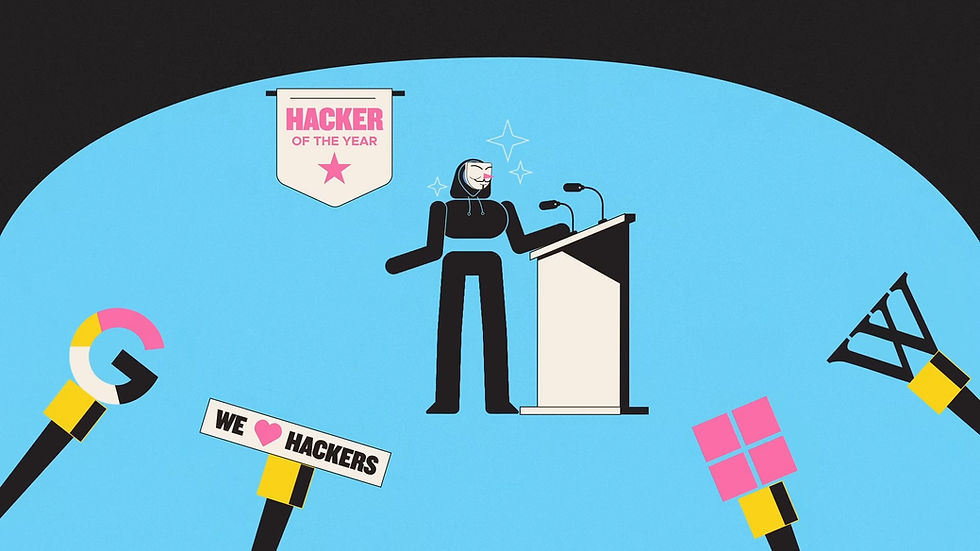
But this is not hacking, at least according to those who subscribe to the hacker ethic. In an attempt to reclaim the word, they’ve coined the term “crackers”. Hackers and crackers may use some of the same techniques, but their motives could not be more different. Crackers break into systems to exploit, steal or cause harm. Hackers see themselves as a community of problem-solvers with a conscience.
As Eric Raymond explains: “The basic difference is this: hackers build things, crackers break them.” He goes further:
Real hackers mostly think crackers are lazy, irresponsible, and not very bright, and object that being able to break security doesn’t make you a hacker any more than being able to hotwire cars makes you an automotive engineer.
Others in the world of cybersecurity have sought to popularise a distinction between “white hat” and “black hat” hackers. In short, black hats are cyber villains who exploit systems to enrich themselves. White hats – like the Chaos Computer Club – probe systems to identify security flaws so they can be fixed.
Hack to the future
It’s easy to forget or overlook just how much of the modern world has been shaped by the kind of mischievous tinkering that defines the hacker ethic.
“Hacker” has not only lost its meaning and become a byword for crime. But the Internet and tech industry have drifted away from the hacker ethic ideals they were founded on. Apple’s closed ecosystem couldn’t be further removed from Jobs and Wozniak’s blue box experiments. The dominance of a handful of massive corporations feels a world away from the hacker-like mentality they espoused as start-ups.
Sir Tim Berners-Lee, inventor of the World Wide Web, describes himself as a “hacker for right”. In his new book, This is For Everyone, he argues that we need to overturn the “power and privacy invasion of big tech”, which has concentrated too much control in the hands of a small number of companies.
His solution? More of us taking control of our own data, pushing back against the dominant platforms and building better alternatives. In other words, rediscovering the hacker ethic.
Recommended links and further reading
How to Become a Hacker (Eric Raymond)
Hackers: Heroes of the Computer Revolution by Steven Levy
The Hacker Hacked (aeon)
The Hacker Ethic Is a Liberal Virus and a Libertarian Battle Cry (Inverse)
What Hollywood Gets Right and Wrong About Hacking (The Conversation)
* What’s more, the inspiration for the Apple I came when Steve Wozniak visited Captain Crunch and saw him connect a teleprinter to ARPANET to play an online game of chess.
** The renowned hacker Richard Stallman clarified that “free” meant unrestricted access – not necessarily free of charge.
Enjoyed this article? If you're interested in innovation and progress, learn from Steve Jobs or explore how microchips have driven human progress.


Comments